

Election Dialogue: Analysis of Candidates' Affidavits in Sylhet Region
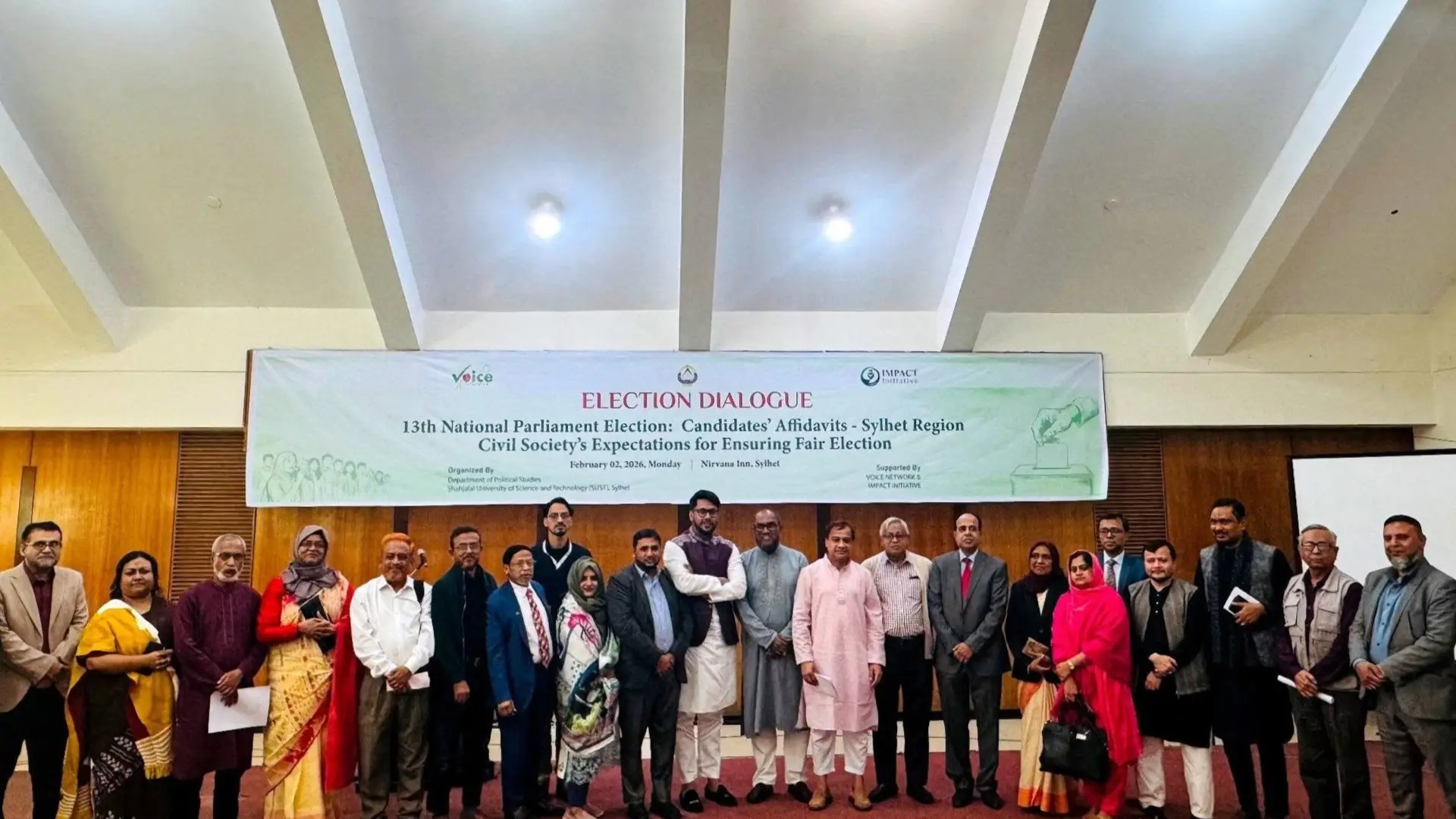
2 February 2026
Overview
Ahead of the 13th National Parliamentary Election, the Department of Political Studies at SUST organized an Election Dialogue focusing on the analysis of candidates' affidavits across the parliamentary constituencies of Sylhet Division.
The programme brought together representatives from political parties, civil society organizations, professional groups, human rights organizations, journalists, and other stakeholders to discuss electoral transparency, candidate profiles, inclusion, law and order, and expectations surrounding the election.
Candidate Affidavit Analysis
A central component of the programme was a student-led analysis of candidates' affidavits across 19 parliamentary constituencies in the four districts of Sylhet Division.
The analysis examined information contained in candidates' declarations, including assets, professions, liabilities, and other publicly disclosed information. The exercise provided students with an opportunity to apply research and analytical methods to contemporary electoral data while contributing to a broader public discussion about electoral transparency.
Discussion
The dialogue subsequently moved beyond the affidavit analysis to broader questions surrounding electoral participation and the conduct of elections.
Participants discussed the backgrounds and profiles of candidates, the importance of transparency in electoral competition, the role of election-management institutions, women's participation, law-and-order concerns, and the participation and representation of different communities.
Representatives from political and civic organizations also shared their perspectives on the responsibilities of candidates, political parties, civil society, and electoral institutions in ensuring a credible and participatory electoral process.
Academic and Civic Engagement
The event reflected the Department's effort to connect academic research with public discussion surrounding elections. By placing student research at the centre of a dialogue involving political and civil-society stakeholders, the programme provided a forum where empirical analysis could inform wider discussion of electoral issues.